
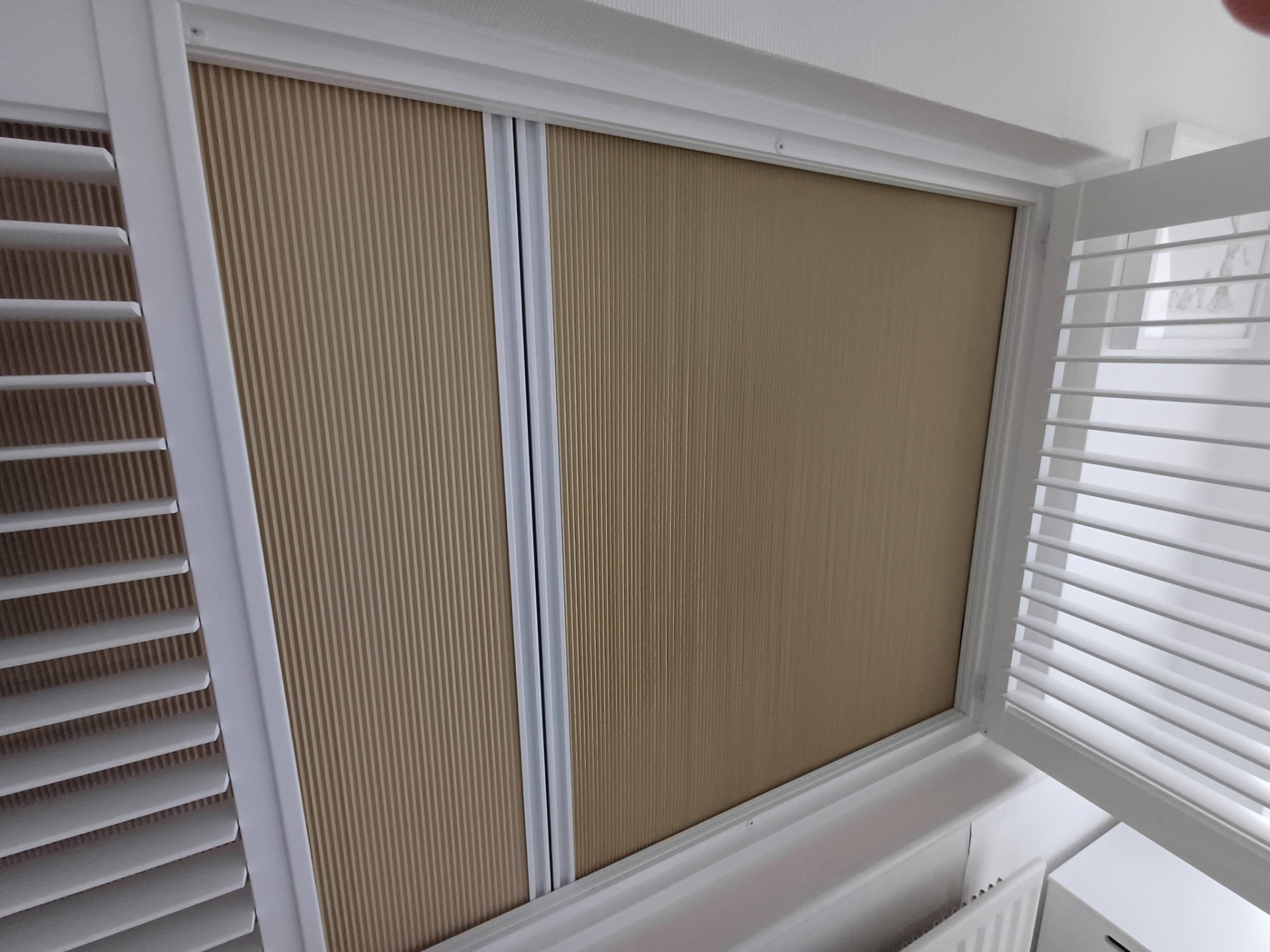
Thermal & Honeycomb BlindsCut Heat Loss Through Old Glass By Up To 45%Made-To-Measure Across Shropshire
Honeycomb cellular blinds trap a still-air layer against the glass, a proven thermal upgrade that beats curtains, rollers and Venetians on every BBSA energy test, recoverable in heating savings within 3–5 winters.
BBSA-tested fabrics. Up to 45% heat-loss reduction. 10-year written installation guarantee.
What it is, who it's for, and why it matters
What it is
A thermal blind uses honeycomb-cell fabric, two layers of pleated fabric heat-welded to form sealed hexagonal air cells. The trapped air is the insulator. Available in single-cell, double-cell, and triple-cell construction; higher cell counts give better thermal performance.
Who it's for
Owners of period homes with single-glazed sash windows, conservatories suffering heat gain in summer and heat loss in winter, listed buildings where double glazing isn't permitted, and anyone wanting to reduce heating bills without replacing glass.
When to specify it
Specify before winter for heating savings. Lead time 2–4 weeks. Perfect Fit thermal blinds for conservatories: specify in spring before the summer sun problem starts.
Why professional matters
The British Blind & Shutter Association independently tests thermal blinds, double-cell honeycomb reduces heat loss through single glazing by up to 45% (vs 14% for a heavy curtain). The science is settled; the savings are measurable on a smart meter.
Get the spec wrong and it costs you more than the original install
Most 'thermal' blinds sold online are nothing of the sort.
Real risks if ignored
- Single-layer 'thermal' rollers (a sheet of acrylic-backed fabric) achieve under 15% heat loss reduction, barely better than a standard blind.
- Cellular blinds fitted without side channels lose 60% of their thermal performance to side-light gaps.
- Wrong cell size (10mm cells in a tall window) gives a stiff, slow operation and a visible buckle.
- Cheap fabrics open and close unevenly, the cells crush within a year of daily use.
Common spec mistakes
- Buying thermal blinds for a double-glazed window, the marginal gain rarely justifies the cost (single-glazing is where they pay back).
- Specifying without side channels on bedrooms, you get the thermal benefit but lose the side-light blackout.
- Choosing a cellular blind for a bay window without confirming the recess depth, 25mm cells need 38mm of recess.
- Forgetting that conservatories need solar-reflective fabric on the sunny aspects, clear-cell fabric will not reduce summer heat gain meaningfully.
We specify by use case: single-glazing winter heating? Double-cell, blackout fabric, side U-channels. Conservatory summer overheating? Reflective-cell Perfect Fit on every pane plus the roof. The right specification is the difference between a token energy saving and a measurable one.
Five stages, one person, no handovers
- 01
Energy & Glazing Survey
We check your glazing (single, secondary, double, triple), aspect (north/east/south/west), and current heating bill. Then specify the cell type, fabric and accessory package for actual measurable savings.
- 02
Specification
Single, double or triple cell. Light-filtering, blackout, or reflective fabric. Side channels confirmed. Operation: cord, cordless, or motorised.
- 03
Manufacture
Heat-welded cell fabric, factory-balanced lift cord, sealed top and bottom rail. Typical 2–4 weeks.
- 04
Install
Single-visit fit. Side U-channels mounted with discreet hidden fixings. Full cell test before sign-off.
- 05
Aftercare
10-year written installation guarantee. Replacement cord and motor parts stocked locally.
Specific outcomes, not vague promises
Measurable Heating Savings
Independent BBSA testing: up to 45% heat-loss reduction through single glazing with double-cell construction.
Summer Cooling Too
Reflective cell fabric rejects up to 78% of solar gain, transforms a hot conservatory.
Quiet, Soft Look
Honeycomb pleats are clean, modern and architecturally quiet, they suit period and contemporary interiors equally.
Compact Stack
Cell blinds stack to as little as 50mm when raised, minimal view obstruction.
Listed-Building Friendly
Where double glazing isn't permitted, thermal blinds are the best legal upgrade for energy performance.
Child-Safe
Cordless or motorised by default; all chain options ship with BS EN 13120 safety devices.
Materials, methods and variations
Everything we'd cover with you on a 45-minute survey, written down so you can read it in your own time before booking.
Cell Construction
Single-cell: lightest, lowest cost, suited to mild rooms. Double-cell: best balance of price and performance, our most-fitted spec. Triple-cell: maximum insulation, recommended for north-facing single-glazed windows and listed buildings.
Fabric Choices
Light-filtering (privacy with diffused daylight). Blackout (full opacity through the cell). Reflective (one face is metallised, rejects solar gain). Sheer / day-night (two fabrics on one blind for flexible privacy).
Cell Size
10mm cells for small windows and tight recesses. 25mm cells for standard residential. 45mm cells for large windows where thermal mass matters. We confirm at survey.
Side Channels
Essential for serious thermal performance, they eliminate side-light gaps that would otherwise vent the trapped air. Aluminium U-channels matched to the cell fabric.
Perfect Fit Thermal
Honeycomb cells in a Perfect Fit frame is the gold-standard conservatory specification, no drilling into uPVC, every pane independently controlled, sashes still tilt and turn fully.
Rooflight & Velux Specification
Side-channel cellular blinds in matched frames for Velux, Roof Maker and Fakro rooflights. Often motorised. Critical for bedroom and bathroom rooflights where summer overheating is a real issue.
Residential vs Listed Building Specification
For listed buildings where double glazing is refused, double or triple-cell thermal blinds with full side channels are typically the only consented thermal upgrade and the most cost-effective.
Honest answers, the ones we give on the doorstep
How much do thermal blinds cost?
Blind screen and thermal blinds from approximately £250 per opening depending on size and specification. Perfect Fit thermal conservatory packs of 8+ windows discounted.
Do they actually save energy?
Yes, BBSA independent tests show up to 45% heat-loss reduction through single glazing with double-cell construction and side channels. Most customers see the difference on their smart meter the first cold week.
Will they cool a hot conservatory?
Yes, with reflective-cell fabric they reject up to 78% of solar gain. A conservatory roof + side panels in reflective cell is the single most effective heat intervention.
Are they worth fitting on double glazing?
Marginal, modern double glazing is already well insulated. We'd recommend Venetian or roller for double-glazed windows and reserve thermal blinds for single-glazed, listed, and conservatory installs.
How do they cope with condensation?
Cellular blinds keep the warm room air slightly off the cold glass, reducing condensation. They are not waterproof, for bathroom installs choose waterproof cellular or specify a PVC roller instead.
Can they be motorised?
Yes, battery, hardwired DC, and io / HomeKit / Matter integration available. Standard on rooflight installs.
Are they child-safe?
Yes, cordless or motorised by default; chain options ship with BS EN 13120 safety devices.
How long do they last?
15+ years with normal residential use. Cell fabric is replaceable on the original headrail when eventually needed.
A measurable cut in heating bills, fitted in one visit
BBSA-tested fabrics. Honest specification, we'll tell you if your windows don't need them. Free home survey across Shropshire.
- 10-year written installation guarantee
- 5★ Google-rated surveys
- Same-week surveys
- Fully insured, owner-fitted
Request your free home survey
Most surveys booked within 5 working days.